SMB1001 Certification Australia

Prepare your business for SMB1001 certification with practical cybersecurity, policy and evidence support from Accel IT.

No Lock-In Contracts

A relationship based only on trust.

100% Australian Based

Local tech support consultants.

5 Stars from 70+ Reviews

Google, Facebook, & Trust Pilot.

A Practical Cybersecurity Standard for SMB

SMB1001 gives small and medium-sized businesses a structured pathway for improving cybersecurity. Rather than immediately adopting a complex enterprise framework, businesses can work towards one of five levels based on their existing security, risk profile and customer requirements.

Accel IT helps identify gaps, implement the required controls and prepare the technical evidence needed for the certification process.

Readiness Assessment
We assess your existing technology, security controls, policies and processes against your target SMB1001 level. You receive a clear overview of what is already in place, what needs improvement and the work required to become certification-ready.

Cybersecurity Improvements

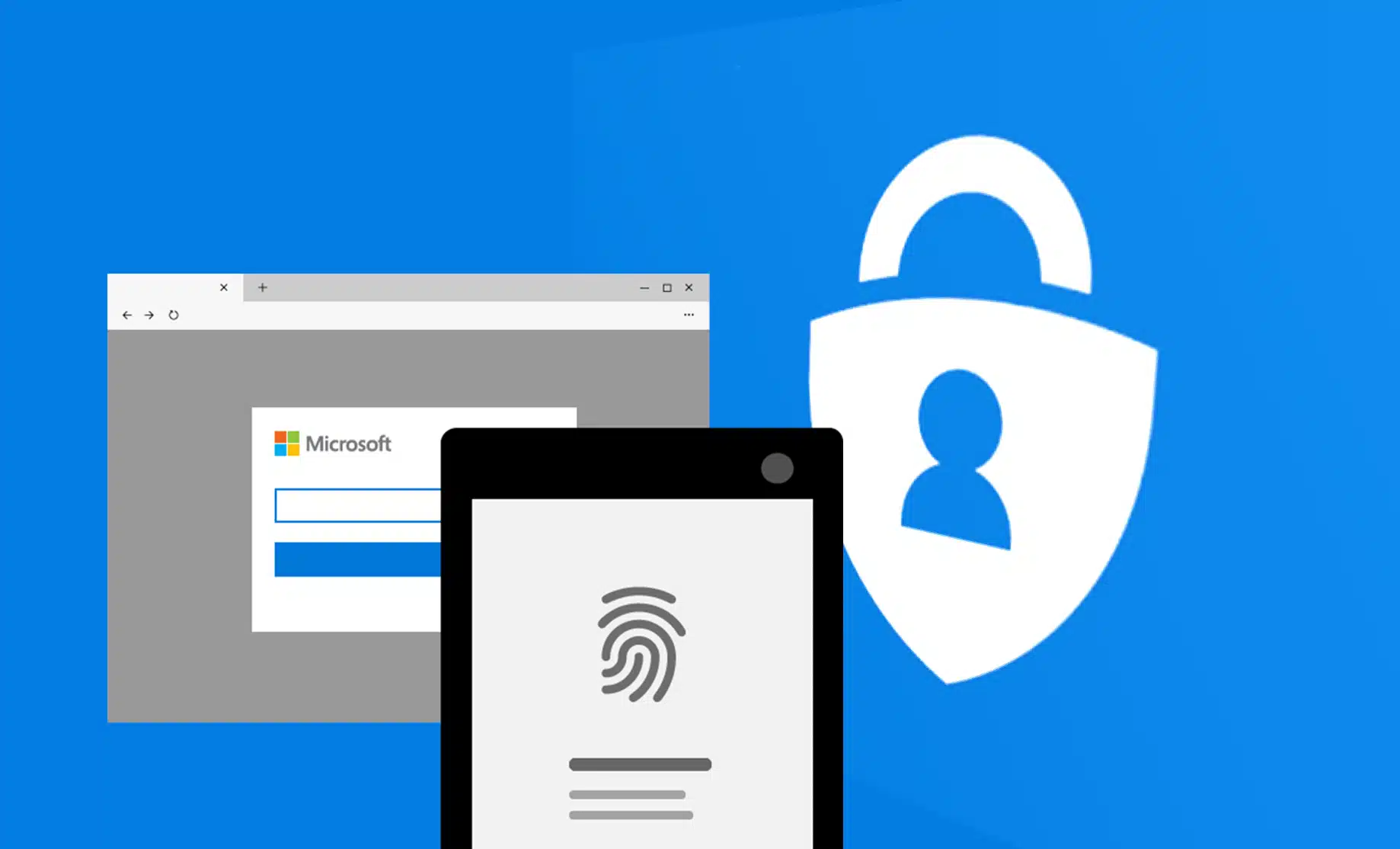
Where gaps are identified, we help implement the required protections. This may include multi-factor authentication, endpoint security, managed patching, secure remote access, email authentication, firewall configuration and reliable business backups.

Policies and Evidence

SMB1001 includes business processes as well as technical controls. We help prepare practical cybersecurity policies, incident response plans, asset registers and supporting reports that reflect how your business actually operates.
computer

Ongoing Maintenance

SMB1001 certification is valid for one year, so controls must continue to be monitored and maintained. Accel IT can provide ongoing support, reporting, policy reviews and preparation for annual recertification.

The Five SMB1001 Levels

Level 1 establishes foundational cybersecurity protections.

It includes measures relating to:

  • Engaging a technical support specialist
  • Business firewall protection
  • Antivirus protection
  • Automated software updates
  • Strong password hygiene
  • Backup and recovery
  • Cybersecurity awareness training

Level 1 is generally suitable for very small businesses beginning their cybersecurity improvement journey.

Level 2 builds on the foundational controls and begins formalising business security practices.

Additional measures include:

  • Removing unnecessary administrator access
  • Providing individual user accounts
  • Introducing a password manager
  • Multi-factor authentication for employee email
  • Email authentication and anti-spoofing
  • Server patching
  • Confidentiality agreements
  • Invoice fraud procedures
  • Visitor management

Level 2 may suit established small businesses that already have basic IT management but need stronger access controls and documented processes.

Level 3 introduces a broader and more mature cybersecurity approach.

Additional controls include:

  • Endpoint Detection and Response
  • MFA for business applications
  • Secure remote access
  • Cyber insurance
  • A formal cybersecurity policy
  • A cyber incident response plan
  • Secure device and document disposal
  • A digital asset register
  • A responsible AI usage policy
  • More advanced employee security awareness

For many established small and medium businesses, Level 3 may provide the strongest balance between practical security, business processes and affordability.

Level 4 is intended for businesses with relatively mature cybersecurity arrangements.

It introduces or strengthens requirements relating to:

  • Vulnerability scanning
  • Stronger MFA controls
  • MFA for VPN and remote access
  • Protection of important data
  • More mature backup and recovery arrangements
  • Expanded technical oversight
  • Independent verification and attestation

Level 4 requires a greater level of evidence and external verification than Levels 1 to 3.

Level 5 is the highest SMB1001 certification level.

It introduces more advanced requirements, including:

  • Encryption of important information at rest
  • Application control
  • Blocking untrusted Microsoft Office macros
  • Penetration and vulnerability testing
  • Social engineering testing
  • EDR supported by a Managed Detection and Response service
  • Stronger incident response arrangements
  • Supplier cybersecurity management
  • Vetting for staff with privileged access
  • Independent verification and attestation

Level 5 is generally more appropriate for organisations with sensitive information, higher cyber risk or demanding customer and supply-chain requirements.

smb1001 5 level tier

We Partner With Industry Leaders

ubiquiti –
hp enterprise
lenovo
huntress Logo Wide Teal
microsoft partner –
cisco

Why Work With Accel IT?

Accel IT combines practical cybersecurity experience with an understanding of how small and medium-sized businesses actually operate. We help turn SMB1001 requirements into clear, manageable actions rather than leaving your business to interpret a technical checklist on its own.

Our team can review your current environment, implement missing security controls and prepare the supporting evidence needed for certification. Because we also provide managed IT, Microsoft 365 security, endpoint protection, backups, patching and security awareness training, many of the required controls can be maintained as part of an ongoing service rather than treated as a once-a-year compliance exercise.

We focus on improvements that are appropriate for your organisation, budget and risk profile. The goal is not simply to obtain a certificate, but to build cybersecurity practices that remain effective and manageable after the assessment is complete.

Cybersecurity designed around smaller businesses.

SMB1001 FAQ's

No. Accel IT assists with readiness, implementation and evidence preparation. Formal certification is facilitated through an authorised Dynamic Standard Certifier.

SMB1001 certification remains valid for one year.

This depends on your existing security, business size, risk exposure and customer requirements. A readiness assessment can identify an appropriate starting point.

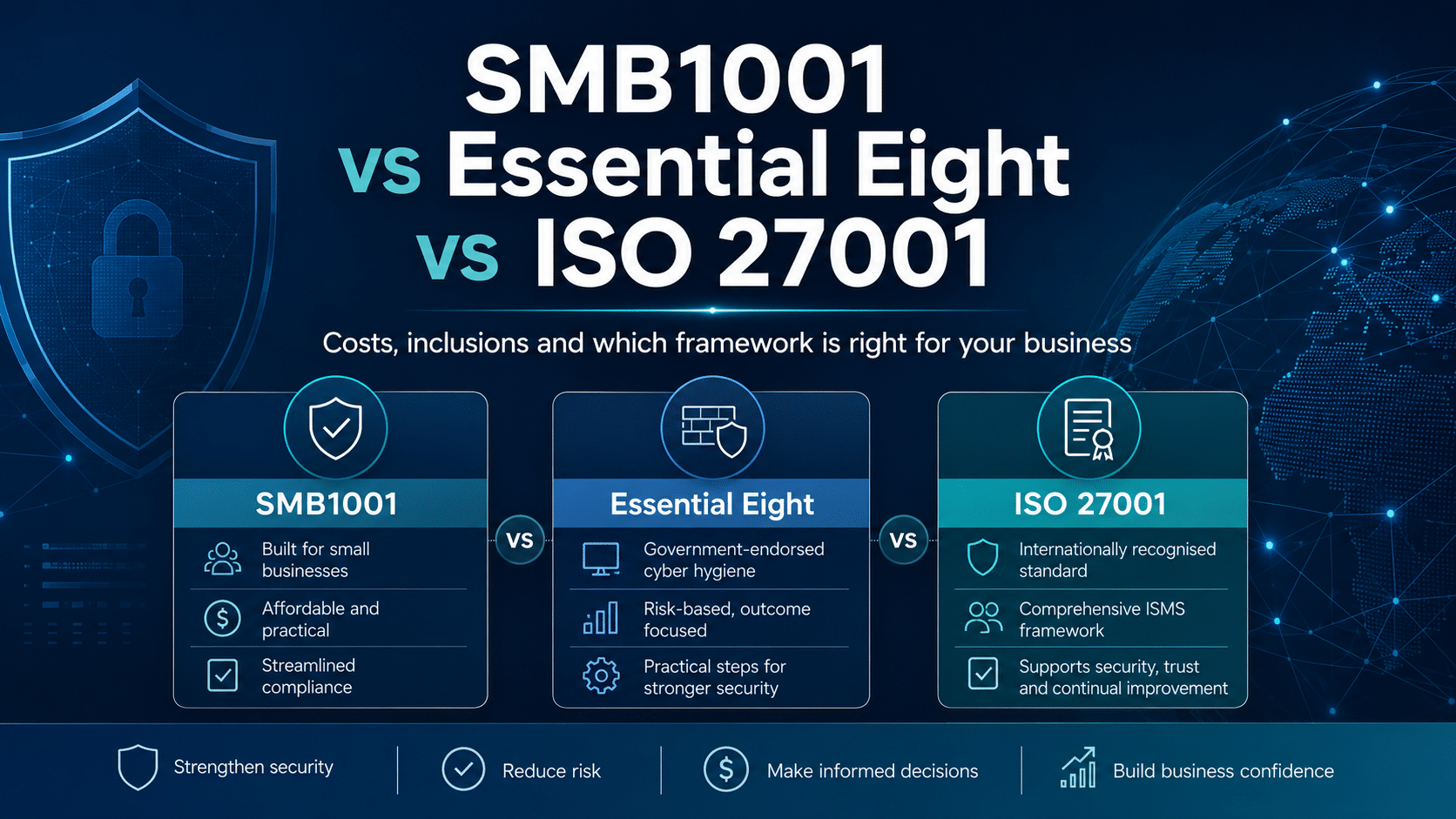
No. They overlap in some areas but have different purposes, requirements and assessment models.

An IT provider is not the party making the final self-attestation for Levels 1 to 3, but many businesses need technical assistance to correctly implement and demonstrate the required controls.

The standard also includes engaging a technical support specialist as a foundational requirement.

Accel IT can help assess your current environment, explain technical requirements, remediate gaps and prepare supporting evidence. The organisation remains responsible for ensuring that information submitted during self-attestation is accurate.

Let's Talk Security

See Our Cyber Security Tips and News

Interested in learning more?

Call us: