
Managed Cyber Security Services
No Lock-In Contracts
100% Australian Based
5 Stars from 70+ Reviews
Protect Your IT Systems & Data.
24/7 SOC Monitoring and Threat Response
Endpoint and Device Protection

Microsoft 365 and Identity Security

Security Awareness Training
Security Posture Management
Security Monitoring and Reporting
AccelProtect Advanced Security Offering
Managed Identity Threat Detection and Response (ITDR)
Monitors Microsoft 365 identities for account takeover, business email compromise and suspicious access using stolen or compromised credentials.
- 24/7 Microsoft 365 identity monitoring
- Suspicious login and session detection
- Business email compromise protection
- Malicious inbox and forwarding rule detection
- Rogue application and OAuth monitoring
- Rapid account containment and response
Managed Endpoint Detection and Response (EDR)
Protects your computers and servers against ransomware, malware and attackers attempting to gain a foothold within your network.
- 24/7 endpoint threat monitoring
- Ransomware and malware detection
- Persistent foothold detection
- Automated device isolation
- Expert investigation and remediation
Managed Security Information and Event Management (SIEM)
Collects and analyses security information from across your technology environment, providing greater visibility into suspicious activity and potential cyber incidents.
- Centralised security log collection
- 24/7 security event monitoring
- Threat correlation and investigation
- Searchable security event history
- Incident and forensic reporting
- Support for compliance and cyber insurance requirements
Managed Identity Security Posture Management (ISPM)
Continuously strengthens your Microsoft 365 environment by identifying and correcting weak settings, excessive permissions and security policy drift.
- Microsoft 365 security posture monitoring
- Conditional Access and MFA hardening
- Risky access and permission identification
- Security policy deployment
- Continuous policy enforcement
- Detection and correction of configuration drift
Managed Endpoint Security Posture Management (ESPM)
Proactively reduces the attack surface of Windows computers by identifying vulnerable software, unsafe applications and missing security controls.
- Endpoint application visibility
- Application control and hardening
- Vulnerability and patch visibility
- Detection of missing security tools
- Endpoint configuration monitoring
- Security posture and compliance reporting
Managed Security Awareness Training (SAT)
Helps employees recognise phishing, social engineering and other common cyber threats through engaging, ongoing training.
- Short and engaging training episodes
- Managed phishing simulations
- Training based on current cyber threats
- Personalised phishing coaching
- Completion and risk reporting
- Support for security and compliance requirements
Device Security
- Live asset tracking
- GPS/ Wi-Fi triangulations
- Remote lock and wipe
- Full disk encryption
- Setup geo fences with alerts
- Multi Factor Authentication
DNS Security
- Block malicious domains
- Up-to minute global block list
- Reduce malware & spyware
- Prevent callbacks
- Improve search privacy
Spam & Email Security
- Advanced Email Filtering
- AI-Powered Threat Detection
- URL & Attachment Scanning
- Domain & Sender Reputation Checks
- End-User Quarantine & Reporting
What is Essential Eight Cyber Security
The Essential Eight is a cyber security framework developed by the Australian Signals Directorate to help organisations reduce their exposure to ransomware, data breaches and other common cyber threats.
It covers important security controls including system and application patching, multi-factor authentication, restricted administrator access, application control, Microsoft Office macro restrictions, application hardening and reliable backups.
Implementing the Essential Eight can help reduce the likelihood of a successful cyberattack while also improving your organisation’s ability to recover if an incident occurs. The framework includes different maturity levels, allowing businesses to progressively strengthen their security based on their risks, systems and operational requirements.
Accel IT can assess your current security maturity, identify gaps and help implement practical improvements aligned with the Essential Eight. We can also assist with ongoing monitoring, documentation and maintenance to ensure the controls continue working effectively as your business and technology environment change.
For more detailed information, visit our dedicated Essential Eight services page.
Your Defence Starts With Us.
We Partner With Industry Leaders
Cyber Security & Malware FAQ's
What cybersecurity protections do you offer?
We provide end-to-end cybersecurity solutions to protect businesses from cyber threats, including:
- Managed Detection & Response (MDR) – 24/7 security monitoring and rapid threat response.
- Security Information & Event Management (SIEM) – Centralized logging and analysis of security threats.
- Endpoint Protection (EDR) – Advanced security for desktops, laptops, and servers.
- Network Security & DNS Filtering – Blocks phishing, malware, and scam websites.
- Email & Spam Filtering – Stops malicious emails before they reach your inbox.
- Cybersecurity Awareness Training – Educates your team to recognize and avoid cyber threats.
Our solutions help prevent hacking, ransomware, and data breaches, ensuring your business remains secure.
What is MDR, and how does it help protect my business?
ITDR (Identity Threat Detection and Response) is a proactive cybersecurity service that provides:
- 24/7 monitoring to detect threats in real time.
- Threat intelligence to identify and stop cyberattacks before they escalate.
- Incident response to contain and remediate security breaches quickly.
Unlike traditional antivirus, MDR actively hunts and neutralizes threats, keeping your business protected at all times.
How does SIEM improve security?
SIEM (Security Information & Event Management) enhances security by:
- Collecting and analyzing logs from across your network.
- Detecting unusual activity that may indicate a security breach.
- Automating security alerts to quickly identify potential threats.
- Ensuring compliance with industry security regulations.
SIEM provides deep visibility into security events, helping businesses detect and respond to threats before they cause damage.
How can I protect my business from ransomware and phishing attacks?
Ransomware and phishing attacks are among the biggest cybersecurity threats. We help businesses stay protected with:
- MDR & SIEM services for continuous monitoring and proactive threat response.
- Email security & phishing protection to block malicious messages.
- Endpoint protection to detect and stop ransomware before it encrypts files.
- Cybersecurity awareness training to educate employees on spotting scams.
By combining technology, monitoring, and staff training, we significantly reduce the risk of cyberattacks.
What should I do if my business experiences a cyberattack?
If you suspect a cyberattack, take these immediate steps:
- Disconnect affected devices from the network to prevent further spread.
- Do not engage with ransomware demands—seek professional assistance first.
- Contact Accel IT immediately for expert cyber incident response.
- Check backups to ensure data recovery options are available.
- Review security protocols to strengthen protection against future attacks.
Our EDR, MDR & SIEM solutions provide real-time threat response and post-attack analysis, helping businesses recover quickly and prevent further breaches.
Let's Talk Security
Cyber Security Glossary - So what does this all mean?
Business Email Compromise (BEC)
Business Email Compromise is an attack where a cybercriminal gains access to, or impersonates, a trusted email account. The attacker may use it to redirect payments, request sensitive information or send convincing phishing messages to employees, customers and suppliers.
Conditional Access
Conditional Access uses rules to control how and when users can access Microsoft 365. Access can be restricted based on factors such as the user’s location, device security, login risk or whether multi-factor authentication has been completed.
DNS Filtering
DNS filtering blocks access to websites and internet services known to distribute malware, phishing pages or other harmful content. It provides an additional layer of protection by preventing users and devices from connecting to dangerous destinations.
Endpoint Detection and Response (EDR)
Endpoint Detection and Response continuously monitors computers and servers for suspicious activity, malware, ransomware and attacker behaviour. Unlike traditional antivirus, EDR can identify more complex threats and help isolate affected devices before an attack spreads.
Endpoint Security Posture Management (ESPM)
Endpoint Security Posture Management proactively identifies security weaknesses across computers and servers. This can include vulnerable applications, missing patches, unsafe software, configuration problems and security tools that are missing or not working correctly.
Identity Security Posture Management (ISPM)
Identity Security Posture Management strengthens Microsoft 365 by identifying and correcting weak security settings, excessive permissions and risky access policies. It also monitors for configuration drift so important security controls remain correctly applied as the environment changes.
Identity Threat Detection and Response (ITDR)
Identity Threat Detection and Response monitors Microsoft 365 accounts for signs of account takeover and identity-based attacks. It can detect suspicious logins, stolen sessions, malicious inbox rules, unauthorised applications and other activity associated with Business Email Compromise.
Incident Response and Containment
Incident response is the process of investigating, controlling and recovering from a cyber security incident. Containment may include isolating a computer, disabling a compromised account, removing malicious access and preventing the threat from spreading further.
Managed Detection and Response (MDR)
Managed Detection and Response combines security technology with continuous monitoring and assistance from cyber security professionals. Rather than simply generating an alert, suspicious activity is investigated so genuine threats can be contained and remediated.
Multi-Factor Authentication (MFA)
Multi-Factor Authentication requires users to provide an additional form of verification when signing in, such as an authentication app or security key. This makes it more difficult for an attacker to access an account using a stolen password alone.
Phishing Simulation
A phishing simulation sends controlled test emails that resemble common phishing attacks. The results help identify employees who may need additional guidance and provide practical coaching on recognising suspicious links, attachments and requests.
Ransomware
Ransomware is malicious software designed to encrypt files, disrupt business systems or steal sensitive information. Attackers commonly demand payment in exchange for restoring access or promising not to release stolen data.
Security Awareness Training (SAT)
Security Awareness Training teaches employees how to recognise and respond to cyber threats such as phishing, social engineering, unsafe links and fraudulent payment requests. Ongoing training helps employees make safer decisions and reduces the likelihood of a successful attack.
Security Information and Event Management (SIEM)
Security Information and Event Management collects and analyses security events from systems such as computers, servers, firewalls, Microsoft 365 and network devices. Centralised logging improves threat visibility, supports investigations and can help businesses meet cyber insurance and compliance requirements.
Security Operations Centre (SOC)
A Security Operations Centre is a team of security professionals responsible for monitoring, investigating and responding to cyber threats. AccelProtect is supported by around-the-clock SOC monitoring, helping ensure important threats are reviewed even outside normal business hours.
Vulnerability Management
Vulnerability management is the ongoing process of identifying, prioritising and addressing weaknesses in applications, operating systems and network devices. This includes monitoring for missing security updates, outdated software and known vulnerabilities that attackers could exploit.
Zero-Day Vulnerability
A zero-day vulnerability is a previously unknown security weakness that may not yet have an available patch. Layered security controls, threat monitoring and rapid response can help reduce the risk while the software vendor develops and releases a fix.
See Our Cyber Security Tips and News
Accel IT Minimum Security Standards: Cybersecurity Is Included, Not an Add-On
Cybersecurity should not depend on whether someone remembered to tick the “premium security” box when looking for an IT partner. However, majority of managed IT providers still separate technical support…
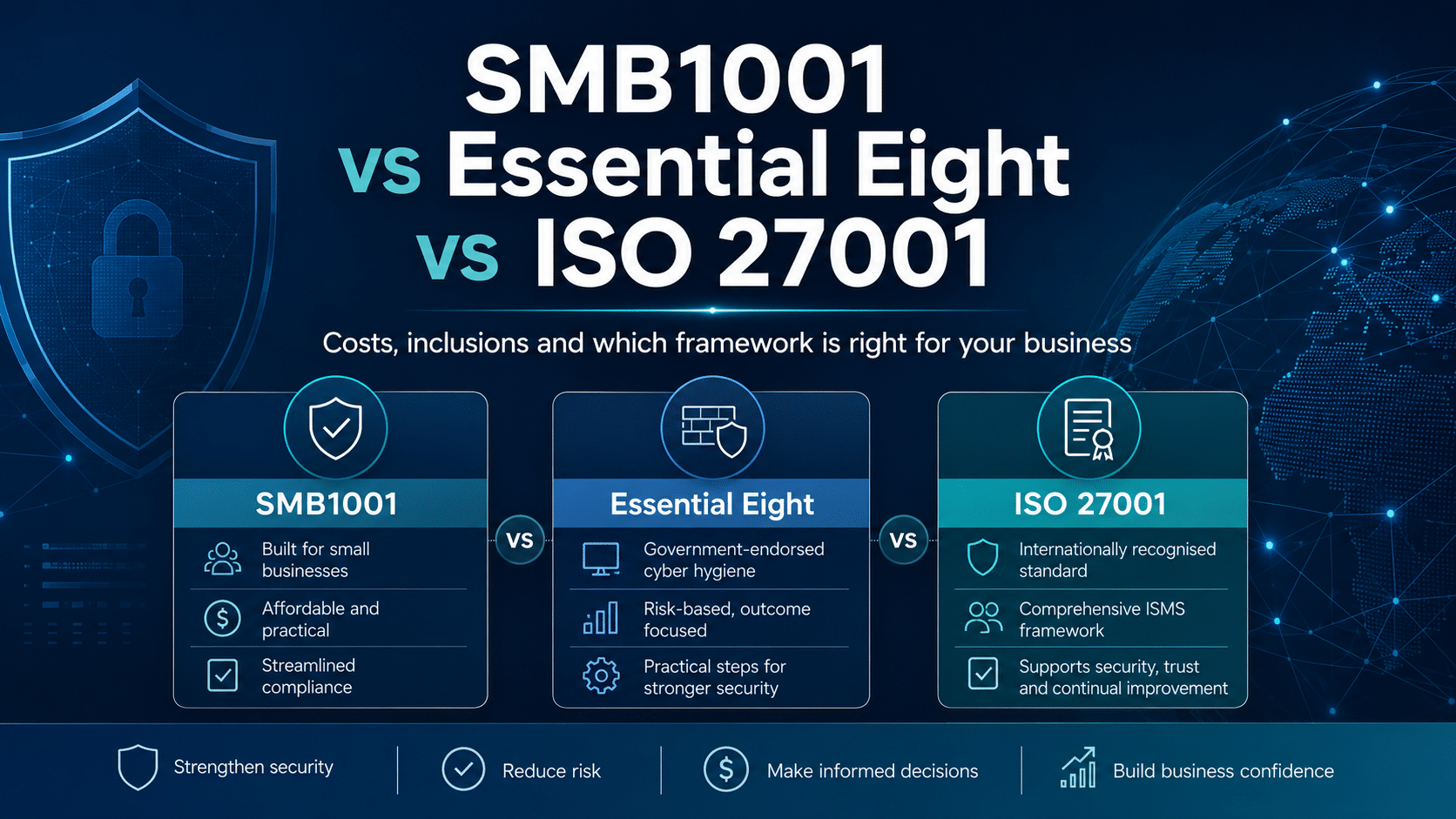
SMB1001 vs Essential Eight vs ISO 27001: Which Is Right for Your Business?
Australian businesses are increasingly being asked to demonstrate that they take cybersecurity seriously. This may come from customers, insurers, government contracts, supply-chain questionnaires or internal risk-management requirements. Three frameworks commonly…
Australian Websites Targeted in Large-Scale CMS Exploitation Campaign
Australian businesses are being warned about a large-scale cyberattack campaign targeting websites built on popular content management systems, including WordPress, Joomla and Craft CMS. According to a critical security alert…

FortiBleed Warning: What Australian Businesses Need to Know About Fortinet Firewall and VPN Exposure
The Australian Cyber Security Centre has issued a critical alert for organisations using Fortinet firewalls and VPN gateways, following reports of a widespread credential-based attack campaign known as FortiBleed. For…
Emails Getting Blocked? It’s Not Always What You Think.
Why You’re Not Receiving Emails From Customers: SPF, DKIM and DMARC Explained It’s a frustrating problem, and one that can cause missed enquiries, delayed jobs, lost sales, and confusion on…
Antivirus Alone Won’t Save You!
For years, traditional antivirus was considered to be the first line of defence in cybersecurity. But the threat landscape has changed fundamentally. Hackers are getting more intelligent. Attacks are more…